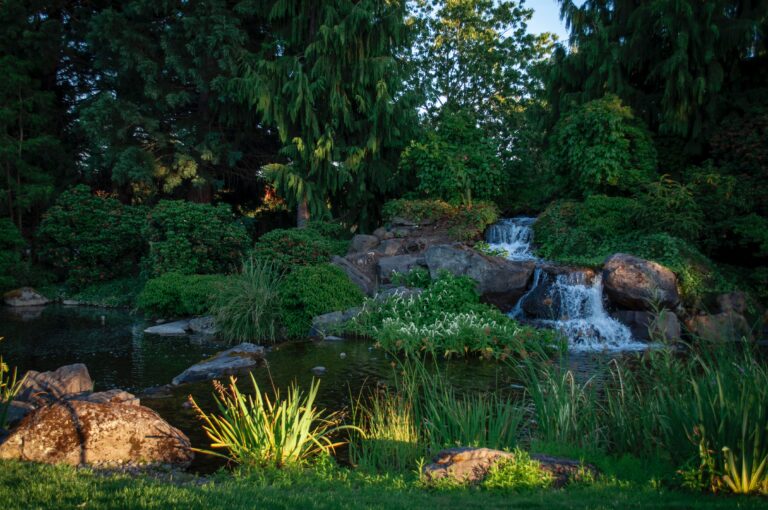


Ponds are a great addition to any outdoor space. They offer a wide selection of shelters for insects and aquatic life and they act as excellent centrepieces that are often easy on the eye.
However, without proper maintenance they are quickly susceptible to damage from excess plant life, dead vegetation, and nutritional runoff which can affect the sight and smell. And it can also become hazardous for your fish and other lifeforms if you don’t attend to your pond maintenance regularly.
One of the key pieces of equipment that can help to counter this is a pond vacuum. This simple, effective tool is fantastic for collecting debris from your pond quickly and easily – resulting in clean water and healthy fish.
In this article, we’ll take a close look at how to use a pond vacuum and achieve the best results. We’ll highlight the differences between cleaning small and large ponds, before touching on some common mistakes to avoid.
How Does a Pond Vacuum Work?
Pond vacuums are quite straightforward in terms of what they do and how they achieve it. In essence, they are designed to separate debris and dead vegetation from clear pond water through a combination of suction, collection, and discharge.
The general process is as follows:
- When the vacuum is turned on, it begins to suck the contents of a body of water through a nozzle and intake hose, usually with help from a telescopic pole.
- The water and debris travel into a collection unit or chamber. It’s here that the solid materials are collected and retained, leaving the water separate.
- The water is then dispersed back out into the pond or water body. Some vacuums can additionally filter dirty water from clean water.
Most pond vacuums will share common features including multiple nozzles, adjustable suction levels, and an automatic discharge hose. They come in both manual and electric versions – electric being the more expensive option and manual being harder to operate.
How to Use a Pond Vacuum
Now that you know how a pond vacuum works, let’s take a look at how to use one effectively. You can use these steps regardless of your pond size, though we’ll explore some of the specific size considerations you may need to make at the end of this section.
Preparing the pond area
Before you start to vacuum, you should ensure that your pond area is suitably prepared. Start by turning off all pumps and filters and check that your initial water levels are appropriate. You should also remove larger pieces of debris manually; not only will this speed up the vacuuming process, but it also minimises the risk of damaging your vacuum components.
Assembling the vacuum
Make sure that you check all of the internal components before starting. Your filter bag should be empty and there shouldn’t be any noticeable signs of wear or damage.
You’ll likely need a selection of nozzles to fully clean your pond area. Wider nozzles are ideal for larger, flatter surfaces. However, for corners and plant edges, you are better off with a crevice or narrow nozzle.
Using the vacuum
When it comes to using your pond vac, you should make sure that it’s placed on level ground beside the water area. You should begin with clearing the shallow areas first, making your way systematically towards the deeper areas.
You should also avoid clearing the entire sludge layer at the base of your pond. While sludge is never nice to deal with, a thin layer does have some benefit to the overall pond health in terms of beneficial bacteria.
Tips for small ponds
There’s no hard and fast rule on how to determine what a small pond is. For the purposes of this article, we’ll consider any pond that is under 1,000 gallons as small.
You’ll usually be able to clear your pond in one sitting, unless you’re having serious issues with excess leaves and debris. If this is the case, you’re going to want to be careful that the interior components aren’t overwhelmed due to the limited water volume and space.
It’s advisable to try and temporarily relocate fish when attempting to vacuum a smaller pond. This is because water levels can fluctuate during the cleaning process, and you don’t want to put them at risk in any way.
If you own a small pond, we recommend our Matala Muck Buster Pond Vacuum. It’s ideally suited to help maintain your small pond spaces. It has a container capacity of 20L with a suction hose of 5m, giving you enough capacity to clean most small areas. Its versatility makes it more than a match for any typical debris you’ll find in a pond, with several attachments each designed to make things as easy as possible.

Above: Matala Muck Buster Pond Vacuum
Tips for larger ponds
For larger ponds, you’re going to need a vacuum with a little more power and performance, ideally with a dual chamber setup. This is to enable continuous cleaning – as one chamber discharges, the second is collecting. You’ll also need a high capacity tank for the waste and debris to avoid frequently needing to empty it.
While water is difficult to keep under complete control without physical barriers, you should attempt to clean larger ponds in sections. This is to avoid prolonged stress for aquatic creatures. You can use mesh screens to cordon off sections during the sessions to try and limit the amount of fish that come into the cleaning area.
Our Matala Power-Cyclone Pond Vacuum is perfect for cleaning larger ponds. It’s a considerable upgrade in terms of size and capacity, with its dual chamber system perfect for extended, interrupted cleaning periods. Additionally, the five metres of elevation on its discharge pump makes it ideal for clearing water over banks and ledges.
It’s also been built with durability in mind. Its high-grade filter is designed to collect large swathes of sand and debris, making this vacuum the perfect choice for clearing out heavy-duty, high debris waterways.
Above: Matala Power-Cyclone Pond Vacuum
Common Mistakes to Avoid When Vacuuming Your Pond
While cleaning your pond with a vacuum is quite a straightforward process in general, there are still a few things that can go wrong if you’re not careful.
Some common mistakes to watch out for include:
- Not turning off filters and pumps: During your cleaning session, your vacuum is going to throw up and disrupt a lot of debris layers, which can easily get caught up in your pumps and filters if they’re still running. So make sure they’re turned off.
- Vacuuming too quickly: You’ll need to take things slowly as you go. Too much movement might risk stirring up particles and clouding the water, making it much more difficult to clearly see the areas that need vacuuming.
- Neglecting maintenance: Once you’ve finished cleaning your pond, you’re going to want to make sure the vacuum components are tended to. Your vacuum needs to be kept free from dirt and muck if you’re going to protect its long-term use.
- Vacuuming too often: This might sound a bit odd, but cleaning your pond too often can be a bad thing. Micro-ecosystems are very fragile, so too much disruption over a short period of time might damage them.
Shop Now
Matala Muck Buster Pond Vacuum = ideal for cleaning small ponds.
Matala Power-Cyclone Pond Vacuum = ideal for cleaning larger ponds.